
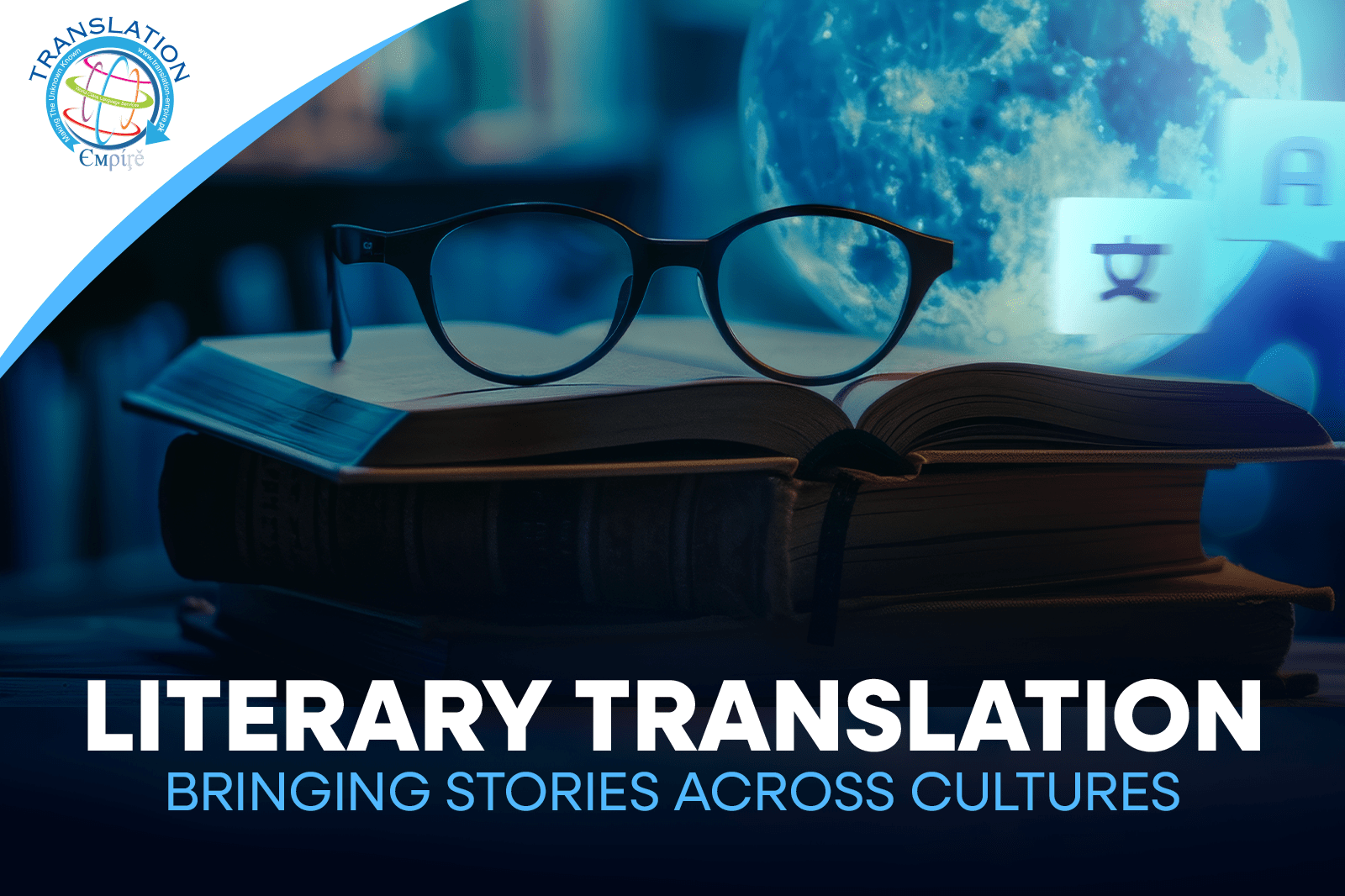
Literary Translation: Bringing Stories Across Cultures
Introduction: Where Language Meets Imagination
One of the most complex types of language work is literary translation. Literary translation is evaluated by emotion, voice, and artistry, as opposed to technical or legal translation, where accuracy is determined by precision. In addition to words, stories are constructed through rhythm, tone, character psychology, cultural allusions, and the author’s distinct worldview.
Therefore, translating literature is a creative collaboration rather than a mechanical task. A good literary translation retains the spirit of the original work while giving the impression that it was written in the target language.
In Pakistan’s expanding literary landscape, proficient literary translation gives authors, publishers, and readers access to international readership, cross-cultural exchange, and the preservation of stories. At Translation Empire PK, we take great satisfaction in providing literary translations that respect artistic intent and genuinely connect with new audiences.
What Makes Literary Translation Unique?
Literary translation differs from all other forms of translation in that it aims to move rather than just inform. In addition to meaning, a literary translator must capture musicality, symbolism, and emotional resonance.
Among the essential components that distinguish literary translation are:
Stylistic Fidelity
Lyrical, minimalist, satirical, and poetic are some of the writers’ unique styles. Even in cases where linguistic structures differ significantly, the translator must adopt the same style in the target language.
2. Artistic Interpretation
Similar to musical performance, literary translation necessitates interpretation. The same sentence may be interpreted differently by two translators, and both interpretations may be legitimate as long as they convey the author’s voice.
3. Cultural Transposition
Concepts from one culture might not be present in another. A literary translator has to choose between maintaining the original for authenticity and making changes for clarity. Meaning, mood, and reader connection are all impacted by each decision.
4. Audience Experience
Above all, the final text must provide readers in the target language with the same emotional experience as the original audience, even if doing so necessitates innovative adaptation.
Dialogue & Tone: The Voice of Characters
One of the most difficult aspects of translating literature is dialogue since characters have unique voices that are shaped by factors like age, location, education, personality, and culture.
Capturing Character Voice
Tone-specific decisions are needed for the wisdom of a village elder, the innocence of a child, and the sarcasm of a villain. The natural rhythm of speech is restored by skilled translation, while literal translation frequently flattens personality.
For instance:
- A humorous insult in Urdu may require cultural softening in English
- A casual phrase in English may require a respectful form in Urdu;Slang, sociolects
- Dialects frequently need to be reimagined rather than directly converted.
The objective is straightforward: characters must sound alive, relatable in the new linguistic context while remaining true to their world.
Metaphors, Symbolism & Figurative Language
The core of literary writing is metaphor, which presents one of the biggest difficulties for translators.
Why Metaphors Are Difficult to Translate
A metaphor has multiple levels of meaning. It could rely on wordplay; cultural symbolism; nature or geography; historical or religious allusions; rhythm or rhyme
Certain metaphors are easy to translate. Others, if taken literally, become completely meaningless.
Strategies Used by Literary Translators
Expert translators select from a variety of methods:
1. Direct Translation
utilised when the metaphor’s meaning in the target language is equivalent.
2. Adapted Metaphor
altered to maintain impact instead of structure.
3. Replacement Metaphor
used when a lengthy explanation is necessary to understand the original metaphor.
4. Cultural Footnotes or Paratext
In order to preserve the original’s cultural richness, explanations are occasionally employed.
Sensitivity, inventiveness, and in-depth cultural knowledge are necessary for every decision, qualities that define expert literary translation.
Author Collaboration: A Creative Partnership
The best literary translations often emerge from close dialogue between the translator and the author (when available) or the publisher.
Why Collaboration Matters
• Maintains consistency in terminology or invented words
• Clarifies intent and emotional subtext
• Assists in maintaining the writer’s voice during complex passages
• Enables direct resolution of cultural questions
Translators are co-creating an experience for a new audience rather than just rewriting text. Working together ensures that the finished product stays true to the author’s vision and enhances authenticity.
Case Examples: How Literary Translation Shapes Global Literature
Global reading culture has been influenced by literary translation in a variety of ways. Think about these widely acknowledged cases:
Case Example 1: Magical Realism Crosses Continents
Global audiences first encountered magical realism through the translation of Latin American authors’ works into English and Asian languages. Their widespread appeal shows how style-driven stories can be effectively translated when metaphysical nuance and rhythm are captured.
Case Example 2: Urdu Poetry in Global Academia
International scholars have been able to study South Asian philosophy, mysticism, and aesthetics thanks to translations of classical Urdu poetry into English, including ghazals, nazms, and Sufi literature. Translators carefully consider how to use metaphor and melody without warping spiritual meaning.
Case Example 3: Children’s Literature Across Borders
When translating children’s books between languages, local cultural norms, values, and humour must frequently be adjusted. A careful balance must be struck between preserving joy and simplicity and incorporating cultural allusions.
These illustrations highlight the fundamental reality that literary translation alters how people read, imagine, and comprehend cultures other than their own.
Why Pakistan Needs Strong Literary Translation
Translation is crucial for cultural preservation and global reach because of Pakistan’s multilingual landscape, which includes Urdu, Punjabi, Sindhi, Pashto, Balochi, English, and regional dialects.
Benefits for Writers & Publishers
- Gaining access to global literary markets
- Expanding readership beyond linguistic barriers
- Preserving regional languages through documentation
- Providing academic opportunities for global studies and comparative literature
Benefits for Readers
• Access to local literature in international languages
• Exposure to a variety of stories and ideologies
• A chance to engage with voices from around the world
• Enhanced literary education
By offering expert, culturally aware literary translation services that respect artistic identity, Translation Empire PK supports these objectives.
How Translation Empire PK Approaches Literary Translation
Creativity, linguistic excellence, and cultural integrity are given top priority in our process.
1. Specialist Literary Translators
We assign translators with proven experience in poetry, fiction, or non-fiction — not generalists.
2. Voice-Matching & Style Preservation
Before translating a single line, we examine the rhythm, tone, and stylistic markers of the original text.
3. Cultural Research
To maintain authenticity, our translators look into settings, references, historical context, idioms, and intertextual allusions.
4. Multi-Stage Review
The translation is examined by a second linguist for stylistic coherence, clarity, cultural resonance, and narrative flow.
5. Collaborative Feedback
To improve tone and intention, we try to include input from authors, publishers, and editors.
6. Ethical Fidelity
Throughout the process, we uphold stringent confidentiality and respect for intellectual property.
Conclusion: Stories Travel Further With Skilled Translation
Literary translation is an art form that combines linguistic proficiency with cultural awareness, empathy, and creativity. It makes it possible for voices to be heard across national boundaries, stories to travel, and ideas to proliferate.
At Translation Empire PK, we think that literature should be artistic rather than just accurate. Our goal is to provide translations that are vibrant, genuine, and profoundly human so that authors, publishers, and storytellers can share their worlds with audiences around the world.
Do you want your book, manuscript, or literary project translated?
To learn more about how our literary translation services can help readers all over the world see your story, contact us now.